

This portal provides basic knowledge on astronomy and highlights current research projects and collaborations in Switzerland.

Image: ESO

Stellar evolution

Wutanfall eines Babysterns - wenn junge Sterne Gas ausstossen und dieses auf Staub trifft, bilden sich diese faszinierenden Wolken
Wutanfall eines Babysterns - wenn junge Sterne Gas ausstossen und dieses auf Staub trifft, bilden sich diese faszinierenden WolkenImage: ESA/Hubble & NASA, B. Nisini
Image: ESA/Hubble & NASA, B. Nisini

Stars have a long, but nonetheless finite life. They are born from gas clouds and, depending on the type of star, follow a different development path before they die.

The birth of a star

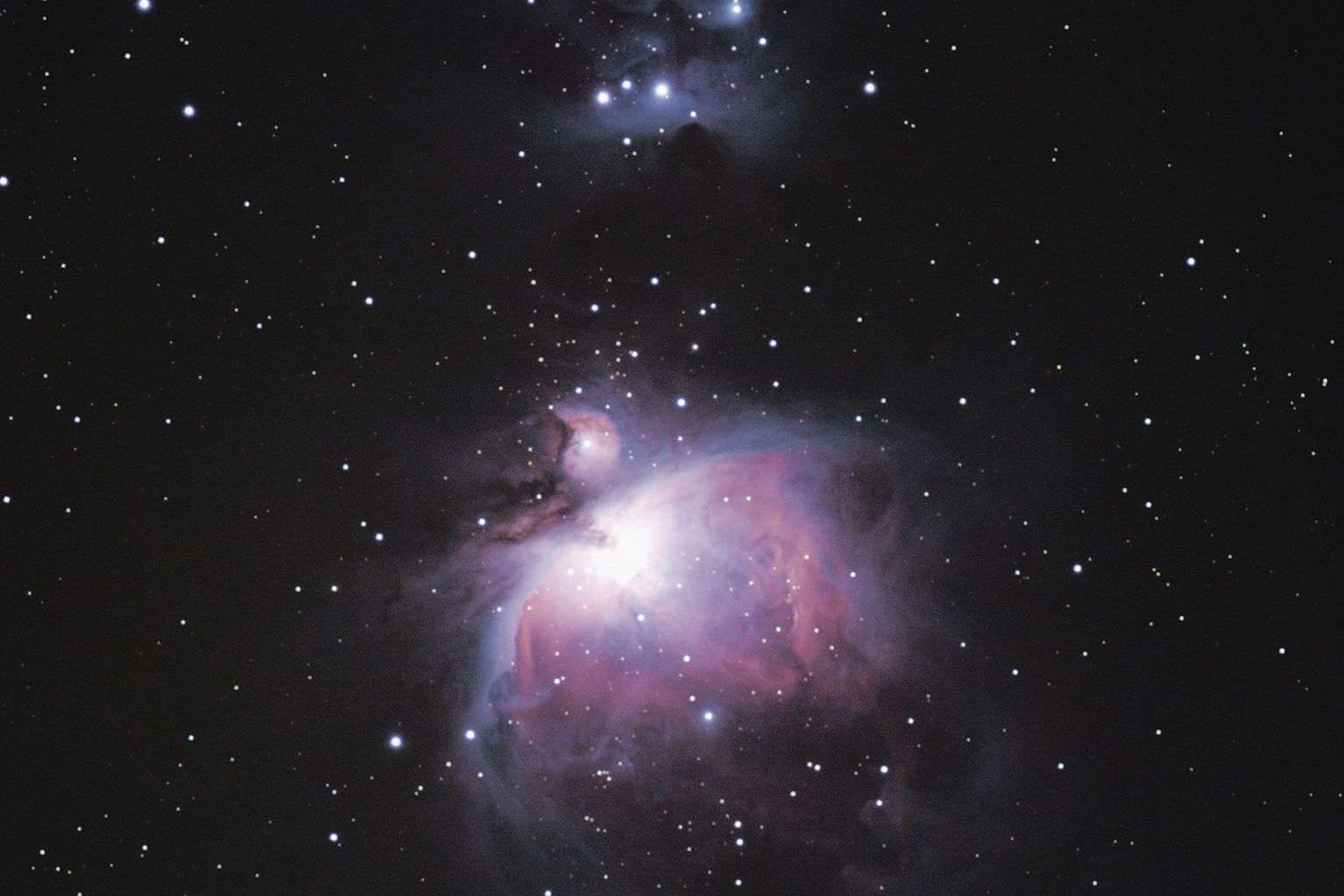
The driving force behind the development of a star is the force of gravity. Gravity keeps us on the surface of the Earth, or the Moon causes the tides in the oceans. Large masses can therefore exert an incredibly strong gravitational pull, and this plays a decisive role in the birth of stars. The interstellar medium contains gas that can condense into huge clouds, mostly of hydrogen. Such a gas cloud can weigh several thousand solar masses. If the critical density of the cloud is exceeded, it begins to collapse, and the existing gas is compressed. The higher the density of the gas, the quicker the collapse, so substructures within the cloud soon begin to collapse. This process progresses faster than the overall collapse and leads to the cloud becoming fragmented. A protostar ultimately emerges from a fragment. This is not yet a real star, as nuclear fusion has not yet started inside it. However, a protostar is in hydrostatic equilibrium, meaning the internal gas pressure now counteracts the gravitational force so strongly that the two forces cancel each other out and the object is not compressed any further.

Star life and death

The life paths of the newly created protostars now begin to separate. Depending on the mass they have accumulated, their development takes a very different course. Processes in the different phases of a star's life are complex. The development is shown here in a somewhat simplified form.

The stellar evolution, depending on the mass of the protostar
The stellar evolution, depending on the mass of the protostarImage: Sarah Arnold
The stellar evolution, depending on the mass of the protostar
The stellar evolution, depending on the mass of the protostarImage: Sarah Arnold

If the mass of the protostar is very low (less than about 0.08 solar masses), its interior will not reach sufficiently high temperatures for nuclear fusion. Such a star therefore never begins to shine, but contracts into a planet-like structure which is known as a brown dwarf.

Light stars (about 0.08 to 0.26 solar masses) spend their entire lives converting their hydrogen into helium. After they have used up their hydrogen, they contract to form so-called white dwarfs which gradually cool down and eventually expire.

Medium-sized stars (about 0.26 to 8 solar masses) first convert the core hydrogen into helium. Later, hydrogen burning continues in the shell around the helium core. The outer part of the star expands, and its giant phase begins. A sudden ignition of the helium (helium flash) then occurs in the core. After complete conversion of the central helium to carbon, helium burning is continued in the shells. The outer layers of the giant star are finally ejected. A planetary nebula forms from the detached shell. The star in the centre of the nebula develops into a white dwarf.

Overall, fusion processes are much faster in massive stars (around 8 to 15 solar masses). The resulting carbon core can ignite suddenly (carbon flash), and this can cause the entire star to explode. This is referred to as a supernova.

Supermassive stars (over 15 solar masses) manage to achieve further fusion steps before their end, leaving an iron core behind, followed by shells of silicon, oxygen, carbon, helium and, on the outside, hydrogen. As iron is at the end of the reaction chain, the star's central energy sources are now exhausted and the iron core collapses to form a neutron star or a black hole. Here too, a supernova, triggered by the core collapse, marks the end of the star.