

(Exo-)Planetary research
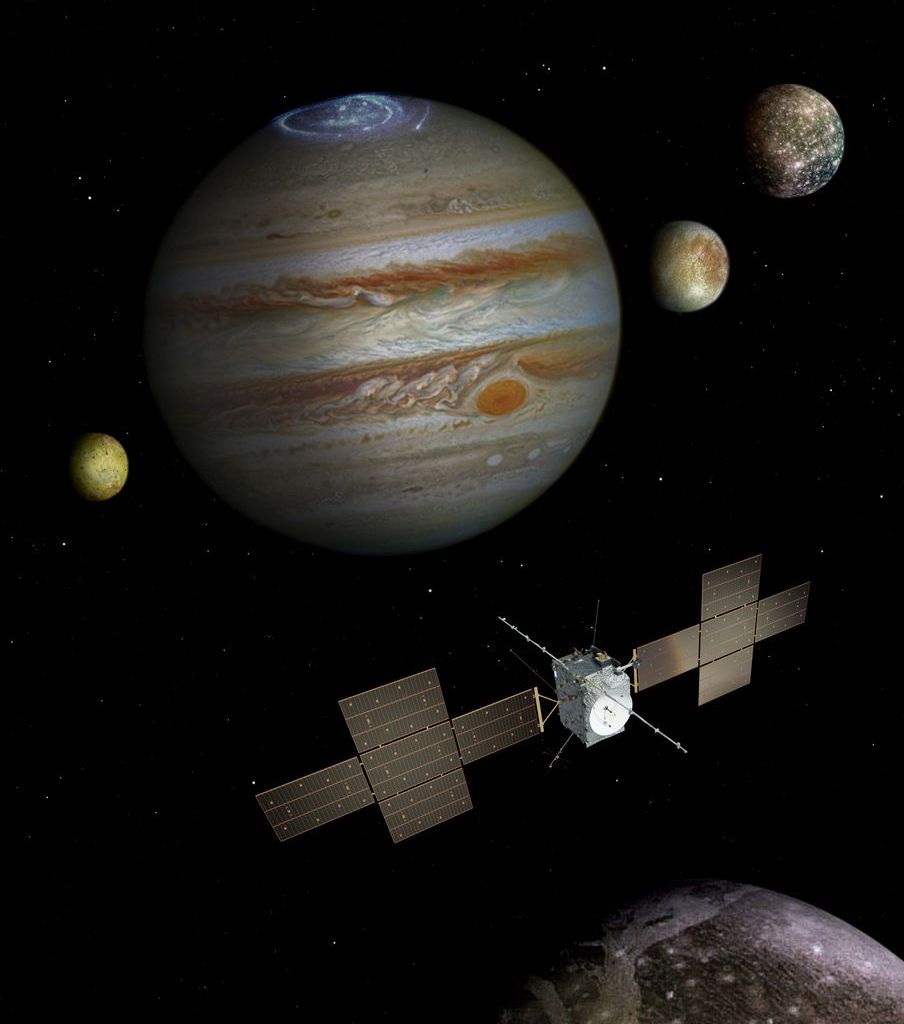
Swiss universities are involved in several projects exploring the planets in our solar system: For example, the University of Zurich is involved in the Juno mission and the University of Bern in the ExoMars project and the BepiColombo space probe.
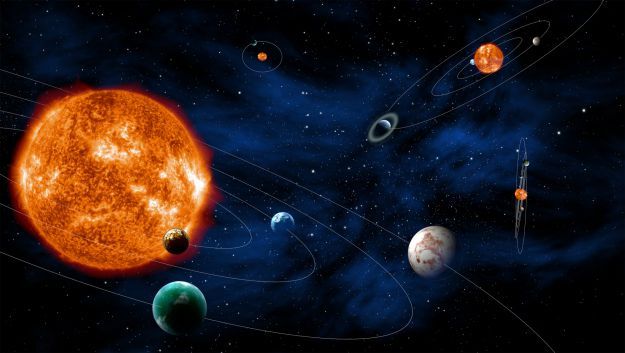
Intensive research is also being conducted into planets outside our Solar System, namely the exoplanets. In 1995, two Swiss astronomers from the Department of Astronomy at the University of Geneva discovered the first planet outside our Solar System orbiting a sun-like star (see the Nobel Prize article on the right). The search for extrasolar planets has been pursued at full speed since this sensational event. To date, over 5000 planets have been discovered orbiting foreign stars.
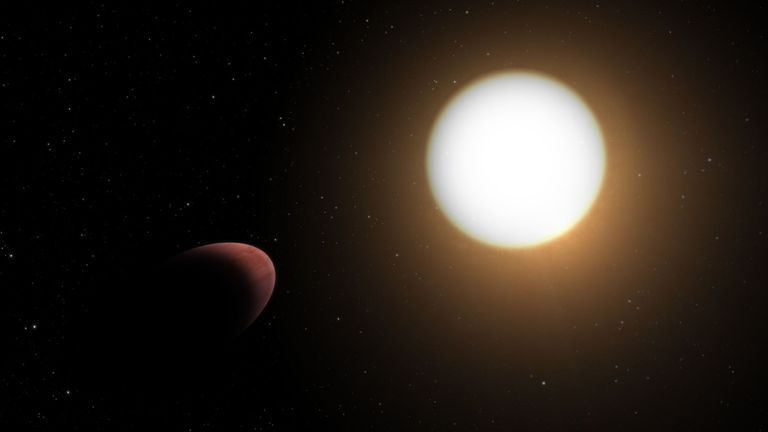
Exoplanet research and the associated questions about extraterrestrial life currently enjoy the status of a research priority in Switzerland. The CHEOPS mission from the European Space Agency (ESA) aims to characterise exoplanets more precisely. The mission's threads come together in Switzerland.
How are (exo)planets researched in Switzerland?
- Theoretical groups deal with the formation of planetary systems and investigate the physical and chemical properties of planets and their atmospheres. Theoretical models are developed for this purpose. These are often implemented in computer simulations and compared with real conditions. Simulations are also suitable for analysing the influence of individual parameters such as temperature or density.
- The search for exoplanets is conducted in observatories. Discovering such planets is extremely difficult, as these celestial bodies are too small to be captured with a telescope. Observers therefore employ a variety of methods to indirectly detect the planets of foreign stars. For example, mother stars indicate a periodic movement caused by the planets. Observers can deduce the existence of a planet from this star movement and even determine the planetary mass with the aid of celestial mechanics.
- Experiments are conducted with various materials in the laboratory. For example, investigations are conducted into how light interacts with a certain surface. How much of it and in which direction is it reflected? Such laboratory experience can be used to draw partial conclusions about the nature of a distant planet, such as what its surface consists of. Is it moist or dry?
- Measuring equipment and other components are developed for space projects.
Research Groups
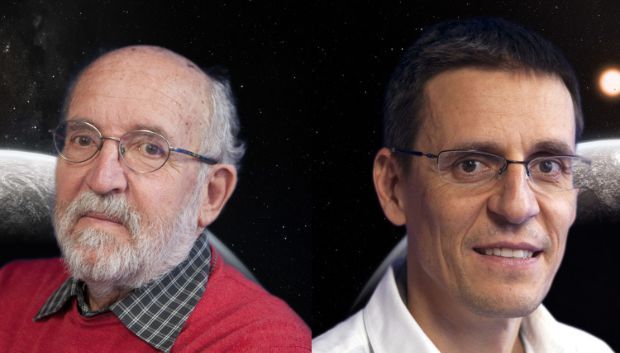
Two researchers, Michael Mayor and Didier Queloz, were awarded the Nobel Prize in 2019 for their discovery of 51 Pegasi b, the first exoplanet.

Planetary research is funded by the federal government as part of a National Centre of Competence in Research (NCCR).
National Centres of Competence in Research are an instrument of the federal government and are intended to strengthen important research areas.